Find your dream home in Málaga

AI-powered property search

Your perfect home in Málaga is just a few clicks away. Fill in the property finder to get started.

597.173
Population
300
Sun days / year
31° / 17°
Summer peak / Winter day
11.7%
Foreign residents
15min
to MÁLAGA AIRPORT
€3,937
Avg €/m²
Updated 19 Sept 2026How we source our data →

Living in Málaga

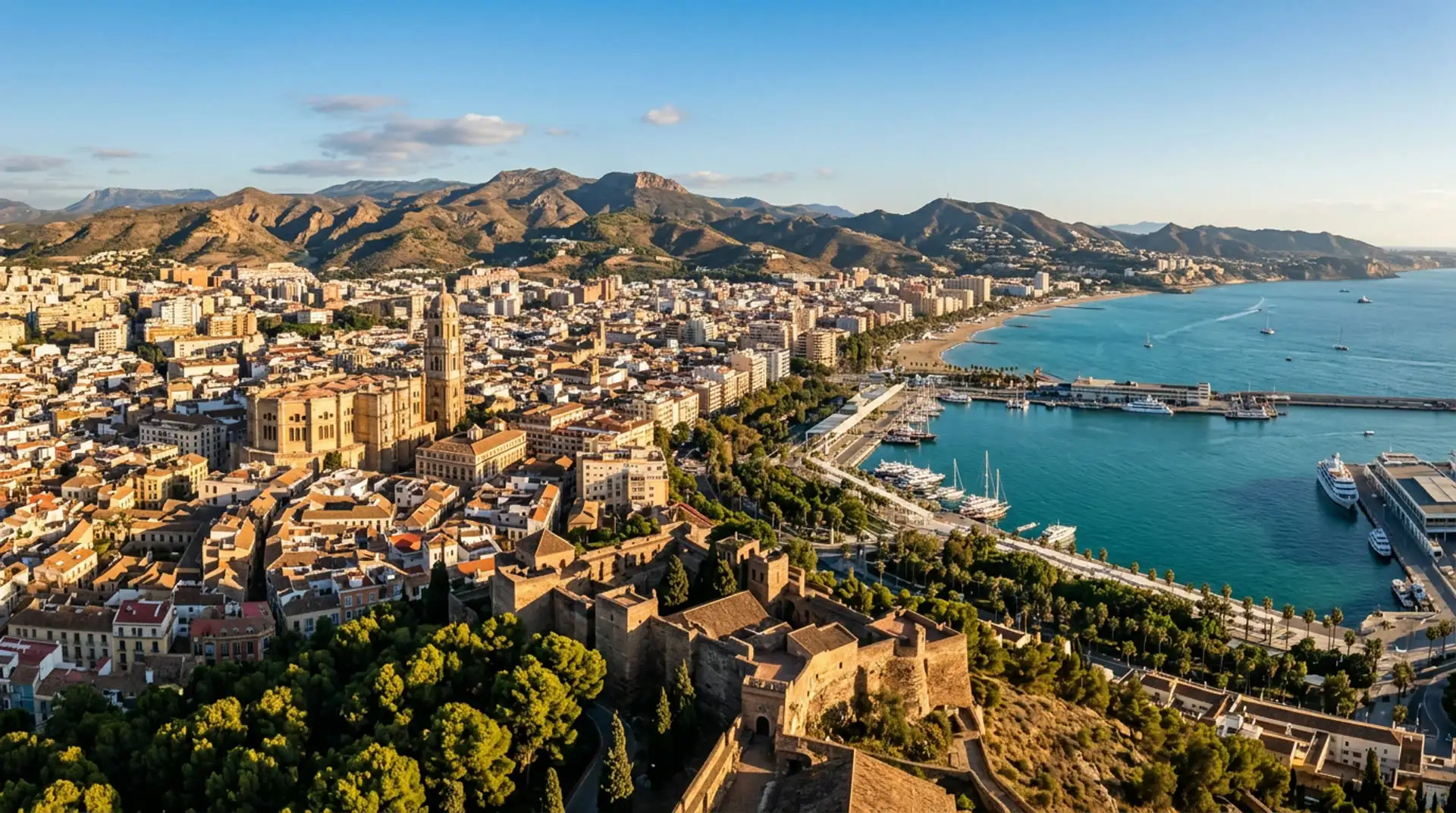
Málaga turned itself from the airport you land at on the way to somewhere else into the reason to come. The Picasso Museum opened in 2003, the Centre Pompidou and the Russian Museum collection followed in 2015, the port was opened back up to the city at Muelle Uno, and the old industrial quarter became Soho, painted end to end. No other city on this coast has done anything comparable.

The city sits in a bowl. The Montes de Málaga close it off behind, the Guadalhorce valley opens to the west, the sea lies in front. That shelter is why winters here are mild, and it is also why the city is dense: there is nowhere to spread except along the shore, so the barrios climb the hillsides instead, while the old centre stays walkable between the cathedral, the Alcazaba and the market halls.

Málaga is a working Spanish city rather than a resort, and that is the trade-off. You get an airport inside the city, hospitals, universities and an economy that runs all year, and you accept that daily life is conducted in Spanish, that the centre is busy and built up, and that a bilingual life arranged around golf and a beach club is something the coast west of here does and this city does not.

The verdict

Honestly considered, both sides.

The upside is real. So is the downside. Both matter more than any brochure will admit.

The case for

  • The airport is inside the city

    Fifteen minutes from the terminal to the cathedral, with routes across Europe all year. No coastal transfer and no motorway run, so visitors can come for a weekend without it becoming an expedition.

  • Culture that stands on its own

    The Picasso Museum, the Centre Pompidou and the Russian Museum collection all arrived within twenty years. This is the only place on the coast where the museums are a reason to live somewhere, not a rainy-day option.

  • Cheaper per square metre than the coast west of it

    You pay less here than in Estepona or Marbella and get a city in return: hospitals, universities, a working port, and a centre that is busy in February as well as August.

  • You can live here without a car

    The centre, Soho, La Malagueta and the port are all walkable, and the metro reaches Teatinos. That is not true of anywhere else on this coast, where a car is simply assumed.

  • A real winter city, not a summer one

    January afternoons sit near 17 degrees and the seafront paseo is used all year. The bowl of hills behind the city holds the warmth in a way the open coast does not.

The case against

  • You will need Spanish here

    Around one in eight residents is foreign, and the largest groups are Moroccan, Ukrainian, Colombian and Italian rather than northern European. The bilingual scaffolding of the coast does not exist in the same way.

  • Tourism has reached the centre

    Short-term lets have pushed residents out of the historic quarter, rents have climbed, and the city has begun restricting new licences. Buying in the old town means buying into that argument.

  • It is dense, and it is loud

    Squeezed between hills and sea, the city builds upward and inward. Interior flats, light wells and street noise are normal, and a quiet balcony costs real money.

  • The beaches are city beaches

    La Malagueta and the eastern sands are convenient rather than beautiful, and they are busy from June. The beaches people travel for are a drive east or west.

  • Summer heat with nowhere for it to go

    August in the centre is heavy. The same bowl of hills that keeps the winters mild traps the summer heat, and the barrios up the hillsides get less relief than the seafront.

Editor's note

Where you might be better off elsewhere

Málaga is the easiest city on this coast to recommend, which is exactly why it is worth being clear about who should not buy here.

If what you actually want is the sea rather than the city, you will be happier west. Estepona and Marbella give you the coast with the international scaffolding Málaga deliberately does not have, and you are still at the airport inside an hour.

If you want a small coastal town but you want this climate, look east instead. Nerja and Rincón de la Victoria are both a short drive and both cost less per square metre than the city centre does.

And if it is Andalusian city life you are after but Málaga has already moved past your budget, Granada is ninety minutes inland with a university, a proper winter and a considerably longer history. You give up the sea and the airport for it, which is a real trade rather than a technicality.

Málaga rewards people who want a city. Be honest with yourself about whether you do.

Málaga on the map

Lifestyle data

Climate

31° / 17°
Summer peak / Winter day
J
F
M
A
M
J
J
A
S
O
N
D
Low 12°CHigh 26°C
Annual mean
18°C
Sun days
300/yr
Rain days
42/yr

station: Málaga Aeropuerto (6155A)

Average 1981-2010 · AEMET

Property market

€3,937
/m²
+6.9% year on year

Updated 1 Jul 2026

Access

MÁLAGA AIRPORT
Málaga-Costa del Sol · AGP
15 min drive
8 km
276+ direct routes
Top direct
LondonAmsterdamBerlinParisStockholmDublin

Community

11.7%
Foreign residents

INE Annual Population Census, nationality basis, 1 January 2025

Amenities

6
Int. schools
8
Hospitals
12
Golf (30km)

Málaga neighborhoods

Where to live and what to expect at each price point.

Malaga old town rooftops with the cathedral tower rising above narrow marble streets and orange trees

Centro Histórico

€4,574/m²Asking price, August 2026320.000 - 730.000 €Implied for a 70 to 160 m² home

Marble streets, the cathedral, the Picasso museum and more bars per block than anywhere else in the city. Beautiful and loud. This is where the short-term letting argument is being fought, so buy with your eyes open.

HistoricWalkableCulture
Painted murals covering the gable walls of apartment blocks in Malaga Soho arts district near the port

Soho

The old industrial strip between the centre and the port, repainted end to end with large-scale murals. Galleries, the Pompidou around the corner, and a younger crowd than the historic quarter just north of it.

ArtsCentralModern
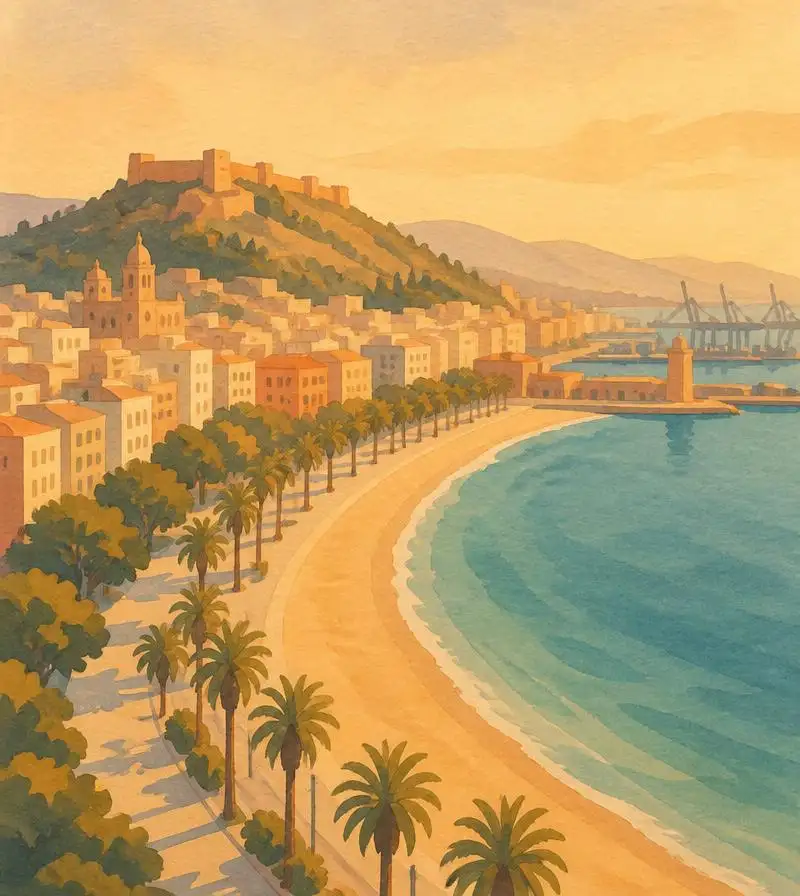
Malagueta beach and palm-lined promenade with the port and the Gibralfaro hill behind

La Malagueta

The beach beside the centre, with the port and the bullring on one side and the Gibralfaro hill behind. You pay for walking to both the sand and the cathedral, and plenty of people decide it is worth it.

BeachCentralPromenade
Nineteenth-century villas behind high garden walls on the eastern hillside of Malaga with jacaranda trees

El Limonar

The nineteenth-century villa quarter on the eastern hillside, built when Malaga had a merchant class with money to spend. Walled gardens, mature trees and the quietest streets within reach of the centre.

VillasHistoricQuiet
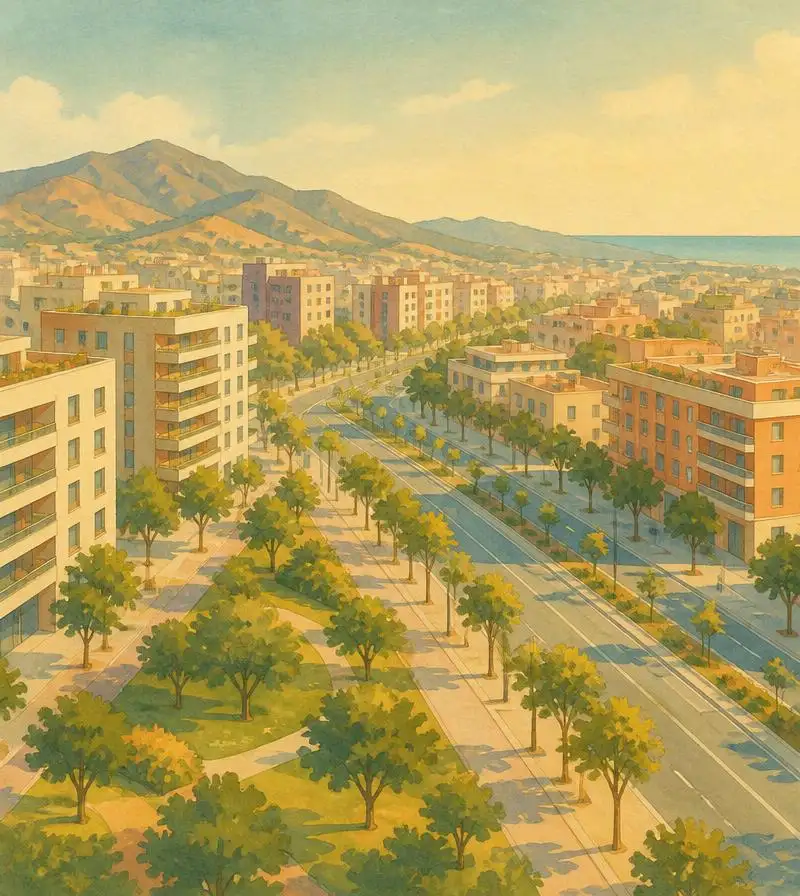
Wide modern avenues and low apartment blocks with green space in the Teatinos district of western Malaga

Teatinos

€3,966/m²Asking price, August 2026280.000 - 630.000 €Implied for a 70 to 160 m² home

Modern, green and built on a grid, out to the west around the university. Wide pavements, newer flats, parking that exists, and the metro into town. The obvious answer for families and the least romantic part of the city.

ModernFamilyUniversity
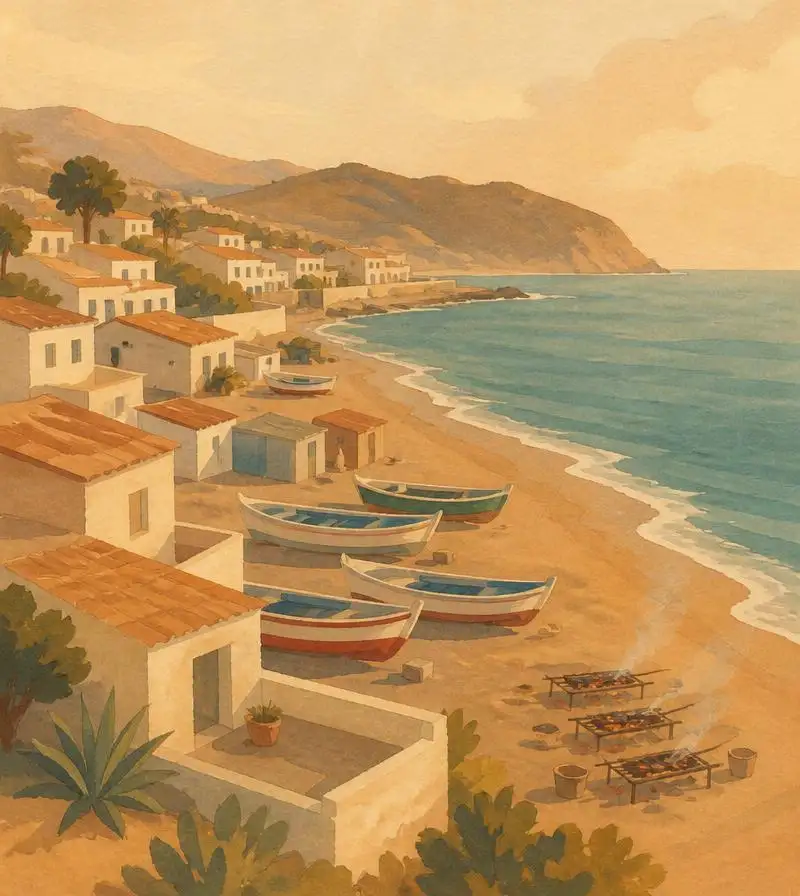
Low fishermen houses and beached wooden boats with sardine grills on the sand at El Palo east of Malaga

El Palo

A fishing village that the city grew around rather than replaced. It is priced below the municipal asking figure. Twenty minutes from the centre on the bus.

BeachAuthentic
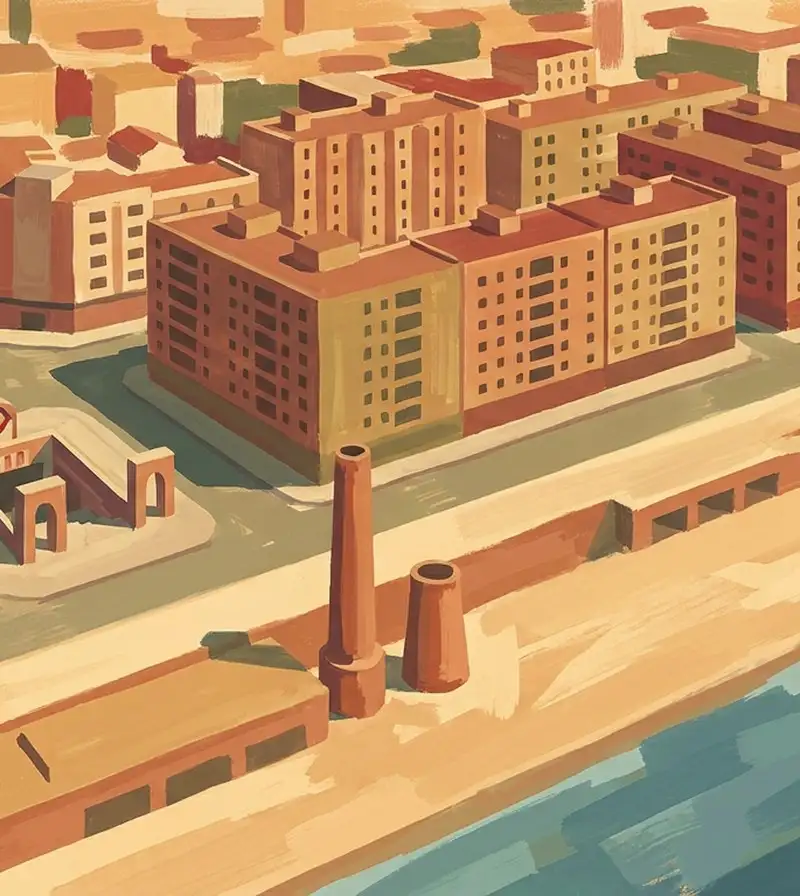
La Misericordia promenade in Carretera de Cádiz, Málaga, with apartment blocks and historic industrial chimneys

Carretera de Cádiz

€4,191/m²Asking price, August 2026290.000 - 670.000 €Implied for a 70 to 160 m² home

Dense city streets west of the port, where Huelin flats sit behind La Misericordia beach and nineteenth-century industrial chimneys line the promenade. Metro line 2 runs underneath, stopping at Princesa Huelin and La Luz.

BeachWalkable
Green hillside homes and subtropical planting in Ciudad Jardín, Málaga

Ciudad Jardín

€2,715/m²Asking price, August 2026190.000 - 430.000 €Implied for a 70 to 160 m² home

Hillside barrios north of the Guadalmedina, including Los Naranjos, Mangas Verdes and Sagrada Familia. La Concepción botanical garden began here in 1855 and now holds tropical, subtropical and native plants.

NatureAffordable
Low homes, market gardens and the coastal plain around Churriana, Málaga

Churriana

€2,852/m²Asking price, August 2026200.000 - 460.000 €Implied for a 70 to 160 m² home

Low housing and market gardens spread across the Guadalhorce plain, with the fairground, market and regional hospitality school nearby. Guadalmar and San Julián beaches run along this side of Málaga. The airport is 8 km south west of the centre.

NatureBeach
Small coves, fishermen’s houses and chiringuitos along Pedregalejo promenade in Málaga

Pedregalejo

The city’s oldest promenade follows small coves between Baños del Carmen and El Palo. Low fishermen’s houses face the water, and chiringuitos along the strip grill sardines beside boats drawn onto the sand.

BeachGastronomyWalkable

Málaga FAQ

Honest answers to the questions buyers actually ask.

Is Málaga cheaper than Marbella and Estepona?+
Yes, and by a clear margin per square metre. What you give up is the coastal setting and the international infrastructure that comes with it. What you gain is a functioning city: teaching hospitals, a university, year-round work, and an airport you can walk out of and be home from in a quarter of an hour. For a buyer who wants a home rather than a holiday base, that trade usually favours Málaga.
Do I really need to speak Spanish?+
More than you would on the coast, yes. Málaga has a large foreign population but it is not a northern European one, so English is not the second language of daily life the way it is in Marbella. Doctors, schools, town hall business and neighbours will mostly be in Spanish. Plenty of people manage without at first, but the city opens up considerably once you have it.
Which part of the city should I look at first?+
It depends on what you want the city for. The Centro Histórico and Soho put you inside the culture and the noise. La Malagueta gives you the beach and the centre together at a premium. El Limonar is the old villa quarter on the eastern hillside. Teatinos is modern, green and built for families. El Palo is a former fishing village that still feels like one.
What is happening with short-term rental licences?+
The city has been tightening them, particularly in the historic centre, in response to residents being priced out. If your plan depends on holiday letting, treat the current rules as a moving target and take local legal advice before you commit rather than after. This is one of the few places on this coast where the regulatory direction is a real factor in the buying decision.
How does Málaga compare to Sevilla or Granada?+
Málaga has the sea, the airport and the money. Sevilla is larger, grander and hotter, with a deeper historic centre and no coast. Granada is smaller, cheaper, cooler in winter and has the mountains and a university town's rhythm. If the sea and the flight connections matter, Málaga wins easily. If they do not, both inland cities give you more history for less money.
Is it a good place to live all year round?+
Better than anywhere else on this coast, because it does not close. The resort towns lose a large part of their population and half their restaurants outside the season. Málaga has a resident city underneath the tourism, so February is quieter than August but the place still works: schools, markets, theatres and offices all carry on regardless.
What is the purchase process like for a foreign buyer?+
Standard Spanish practice, and Málaga handles a high volume of international purchases. You need an NIE number, a Spanish bank account, and an independent lawyer who is not the estate agent, which matters more than any other choice you make. Expect six to ten weeks from accepted offer to keys. Total transaction costs are the regional transfer tax plus notary, registration and legal fees, set out in the buying costs answer below.
What are the costs of buying property in Málaga?+
When buying property in Málaga, budget for property transfer tax (ITP) of 7%, plus roughly 3-4% in notary, land registry and legal fees. Agency commission is usually paid by the seller. On the mainland and the Balearics, new builds pay VAT (IVA) of 10% plus AJD stamp duty instead of ITP. Transfer tax is set by Andalucía rather than nationally, and reduced rates can apply for main homes and younger buyers.
What are the ongoing costs of owning property in Málaga?+
Annual property ownership costs in Málaga include IBI (property tax) of 0.4-1.1% of cadastral value, community fees (for apartments), rubbish collection tax (basura), utility bills, and property insurance. Budget approximately 2-4% of property value per year for all running costs. IBI is set by the town hall of Málaga within a national band, so it is municipal rather than regional.
What taxes do I pay when selling property in Málaga?+
When selling property in Málaga, you pay capital gains tax (plusvalía) on the profit at rates of 19-26% depending on the gain amount. Non-residents have 3% of the sale price withheld at completion. You may also pay municipal capital gains tax. Main residence exemptions may apply for residents over 65. Capital gains tax is national, so it is the same in Andalucía as anywhere in Spain. Plusvalia municipal is set by the town hall of Málaga and has had two calculation methods since the 2021 reform, so ask your lawyer which one is cheaper for you.
Can I still get a Golden Visa by buying property in Spain?+
No. Spain withdrew the Golden Visa property investment route in April 2025, so buying in Málaga no longer leads to residency. Non-EU buyers who want to live in Spain apply for a separate permit instead, most often the non-lucrative visa (proof of income and private health insurance) or the digital nomad visa (remote work for non-Spanish clients). Ask an immigration lawyer which route fits your situation before you buy.

Transfer tax rates as of August 2026. Rates are set per autonomous community and do change. Confirm the current figures with a Spanish lawyer or tax adviser before you budget.

How es.casa helps you

Honest local guides

The pros and the cons of every town, with sourced data on prices, climate and costs.

Your own free dashboard

Your property search, saved cities, mortgage calculator and a step-by-step buying guide, from your first search to getting the keys.

Agents and owners come to you

Local agents who speak your language, and owners selling their own home, contact you about homes that fit your search.

You stay in control

Agents and owners ask to connect first. Your contact details are only shared with the people you accept.

Foreign buyer's guide

New to buying property in Spain?

Our comprehensive guide covers everything foreign buyers need to know - from NIE numbers and residency permits to mortgages and legal requirements.

Mortgage Calculator

Calculate your Spanish mortgage

Use our free mortgage calculator to estimate monthly payments, compare loan scenarios and understand the true cost of buying in Spain.